
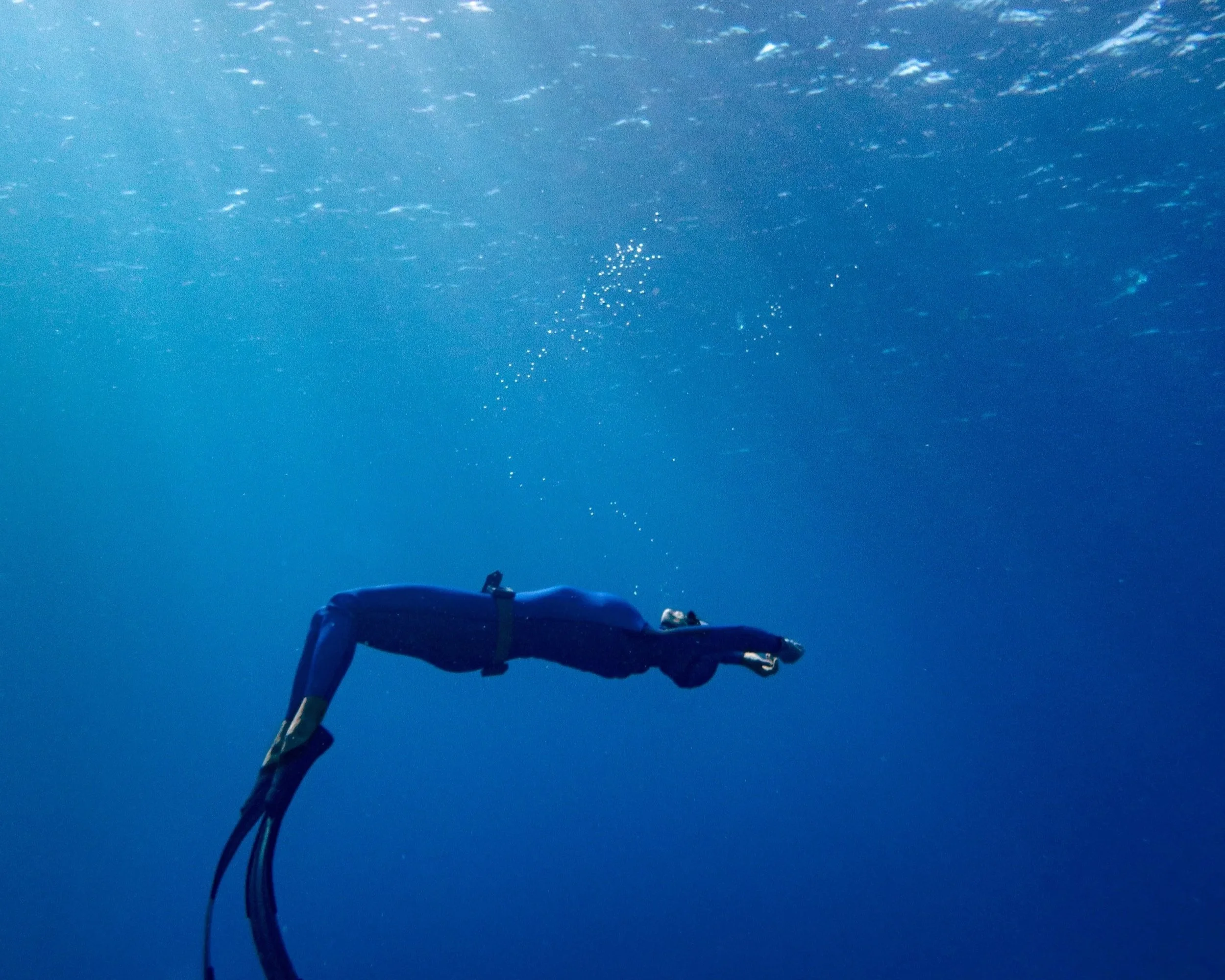
"The cure for anything is salt water: sweat, tears, or the sea."
— Isak Dinesen
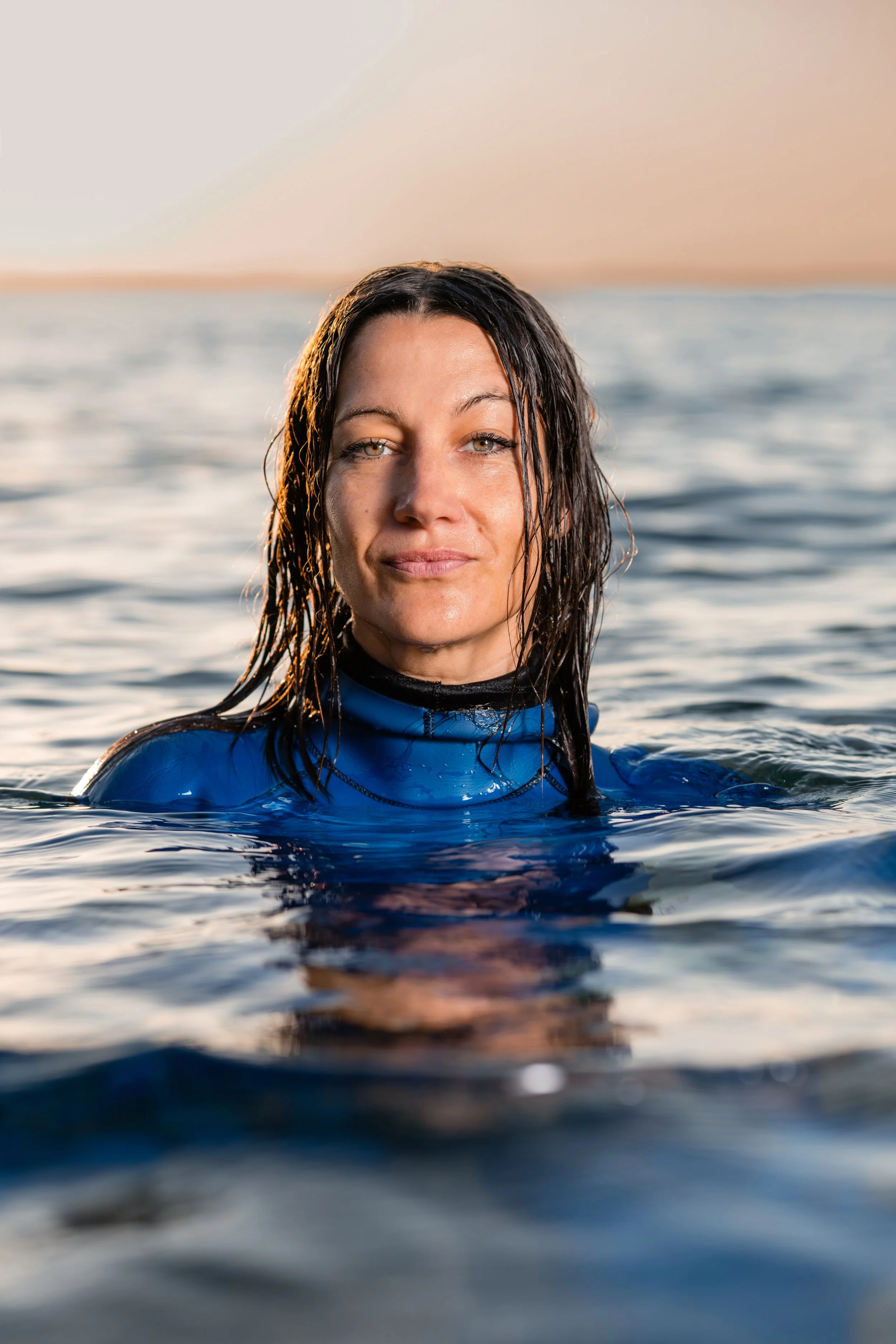
Founder: Kimberley Houghton
Wild Within has been a deeply personal journey, one of healing, inspiration, and connection.
Kimberley found freediving at a challenging time in her life. Like so many who love the ocean, time spent beneath the surface had a profound effect on her: emotionally, physically, and spiritually. It changed what she thought was possible. It changed how she understood herself.
Wild Within was born out of that experience. Out of gratitude and a desire to share what the ocean gave her.
The belief at the heart of it is simple: that transformative experiences in the ocean can return people to themselves. And that a person who feels genuinely connected to the sea will naturally become an ambassador for it, not because they were asked to, but because they could not imagine living any other way.
Kimberley has spent the last ten years training with some of the world's leading organisations in human behaviour, psychology, and performance. Her work draws on neuroscience, flow states, mindset, and trauma-informed practice a combination that allows her to work not just at the level of strategy and habit, but at the deeper level of how a person is actually wired.
She works with athletes and leaders: people operating under pressure, navigating high stakes, and often carrying more than they show. Her specialist trauma training means she can meet clients where they truly are, not just where they present.
As a freediver and lifelong ocean lover, Kimberley recognised early that the water does something no coaching room can replicate. The mental clarity, emotional reset, and physical presence that come from time in the ocean are not incidental. They are physiological. And they are powerful. Her work exists at that intersection between the inner world of the human and the blue underwater world.
Credentials:
The Voyage: Trauma-informed training for clinicians and coaches -ACCPH Accreditation. Accredited at Level 4 & 5, equivalent to the second year of a bachelor’s degree.
Associate Trainer for The Voyage.
Co-Active Coach - CPCC - full training pathway - The most rigorous professional coach training and certification program in the industry.
Flow Research Collective - The Flow Research Collective is a peak-performance research and training organisation. Which studies the neuroscience of peak human performance, focused on the state of flow.
NLP Practitioner - A psychological approach that involves analysing strategies used by successful individuals and applying them to reach a personal goal. It relates thoughts, language, and patterns of behaviour learned through experience to specific outcomes.
ORSC - Organisation and Relationship Systems Coaching - Based Systems Theory, Process Work, Family Systems Therapy, Alternative Dispute Resolution, Quantum Physics, Co-Active Coaching™, and more. At its core is the study of Relationship Systems Intelligence.
You Were Wild Once Dont Let Them Tame You
Love Her But Leave Her Wild
Why Ocean Conservation Needs a Trauma-Informed Approach
Conservation cannot be demanded from a dysregulated world. It can only emerge from one that has learned to feel safe enough to care.
A person living in survival, financial, emotional, psychological, cannot access empathy for the ocean. Not won't. Cannot. The nervous system literally prioritises self-preservation. This is polyvagal theory applied to conservation behaviour, and it is almost entirely absent from the field.
Most conservation communication operates from alarm, urgency, and guilt. It shows people the devastation and expects them to act. But a nervous system living in chronic threat response cannot access the parts of the brain responsible for long-term thinking, empathy beyond the self, or meaningful behaviour change. We are asking a dysregulated world to perform at its highest capacity. We are asking a dysregulated world to perform at its highest capacity. And in doing so, we only amplify the very sense of powerlessness we are trying to overcome.
When we regulate a person, help them move out of threat and into a felt sense of safety, something opens. They stop contracting around me and begin to expand toward we. This is not a metaphor. It is neurobiological. It is a physiological precondition for prosocial behaviour, for care that extends beyond the self.
Conservation, in this framing, is not a campaign. It is an outcome of inner work.
There is a profound irony at the heart of this work: the ocean is both the thing that is suffering and the thing that heals us most effectively.
Blue space research consistently shows that proximity to water reduces cortisol, increases feelings of awe, and decreases self-referential thinking. The ocean activates the same parasympathetic shift that freediving produces physiologically. It downregulates our threat response. It returns us to ourselves.
The ocean regulates people. And regulated people protect the ocean.
The healing is mutual.
This is why Wild Within exists at this intersection. Not to guilt people into conservation. Not to overwhelm them with the scale of what is broken. But to bring them back into their bodies, back into relationship with the living world, and trust that a person who feels whole will be inspired to protect what they love, in their own unique way.
Conservation starts within.
Love her. But leave her wild.